As a Christian, I was encouraged early on to hide God’s Word in my heart. I took that counsel seriously. I spent years memorizing entire chapters of the Bible and encouraged my children to do the same. I believed deeply in the power of Scripture, and I wanted my children to grow up knowing God’s Word well.
But over time, I began to notice something that troubled me.
Even though my children had memorized many verses, when real-life situations came up — fear in the night, anger toward a sibling, worry, discouragement — they often struggled to recall which verses applied. The Scripture was there, somewhere in their minds, but it wasn’t always connected to the moment they needed it most.
That realization forced me to stop and ask an honest question:
Was memorization alone accomplishing what I hoped it would?
When Scripture Felt Distant Instead of Practical
The Bible repeatedly emphasizes the importance of living by God’s Word. “The just shall live by faith” (Romans 1:17), and “faith cometh by hearing, and hearing by the word of God” (Romans 10:17). I understood those verses well. But I began to see that knowing Scripture in general was not the same as knowing how to use Scripture in specific situations.
My children weren’t lacking sincerity or effort. They simply hadn’t yet learned how to connect God’s Word to daily life in a practical way.
The verses were memorized, but they weren’t always accessible.
A Simple Change That Made a Big Difference
Instead of having my children memorize large portions of Scripture without a clear purpose, I decided to try something different. I began choosing five Bible passages for specific situations they might encounter — fear, anger, sadness, disobedience, worry.
We talked about why each verse mattered. We discussed when it could be used. We revisited the same promises again and again.
And slowly, something changed.
One morning, my daughter told me about an experience she had had the night before. She said she had almost come to wake me after a frightening dream, but then remembered the verses we had been learning about fear and God’s protection. Instead of calling out, she repeated those promises quietly to herself until she felt calm again.
Moments like that showed me something important. The Scripture wasn’t just memorized — it was accessible. God’s Word had become something my children could reach for on their own, right when they needed it.
Scripture Was Meant to Be Applied
God never intended His Word to remain abstract or distant. His promises were given to be claimed. His commands were given to be lived. When Scripture is tied to specific needs, it becomes practical, comforting, and empowering — even for young children.
I also realized that children are capable of far more than we sometimes expect. Even longer passages can be learned when they are meaningful. When Scripture speaks directly to a child’s experience, it sticks.
This shift in how we approached memorization became the foundation for everything that followed.
Why This Matters to Me
My desire has never been simply to help children recite Bible verses. My goal has always been to help them know how to turn to God’s Word when life feels hard — when emotions run high, when relationships are strained, or when obedience feels difficult.
Scripture should not feel out of reach in those moments. It should feel familiar, near, and alive.
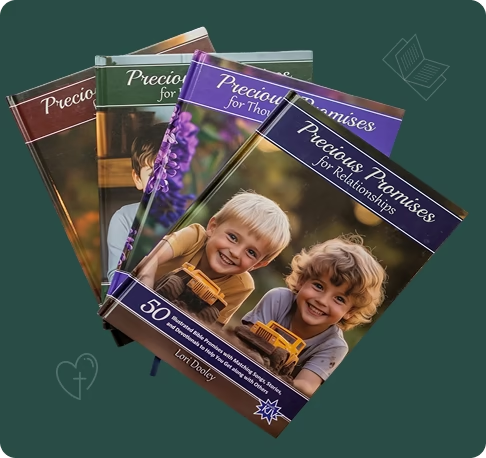
This conviction is what eventually led to the creation of Precious Promises — resources designed to help children connect God’s Word to real situations in their lives. But long before books or songs existed, it began with a simple lesson learned at home:
memorization is valuable, but application is essential.
More Posts